
- 0
- 1,957 word
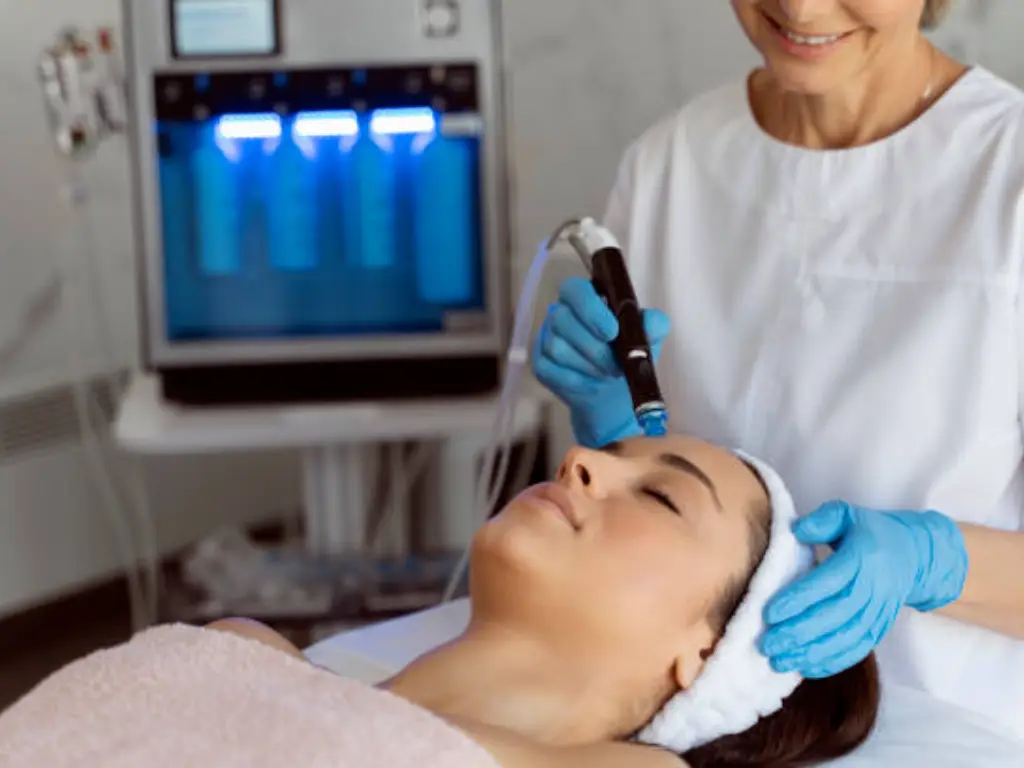
Hydradermabrasion has become one of the most requested facial treatments in UK salons, and the equipment to deliver it now starts at a few hundred pounds rather than the tens of thousands a branded system costs. That change has opened the treatment up to independent salons and mobile practitioners who could never have justified the original outlay.
It has also created a lot of confusion about what these machines are, what you are allowed to call the treatment, and what it actually costs to run per client. This guide covers all three, because the purchase price is the smallest of the three numbers that matter.
Three Different Treatments That Get Confused Constantly
Getting the terminology right is not pedantry here. It determines what you can legally advertise.
| Microdermabrasion | Hydradermabrasion | HydraFacial® | |
|---|---|---|---|
| Method | Dry abrasion using a diamond tip or crystal stream | Water-based exfoliation combining suction, fluid delivery and serum infusion | A specific patented system from its trademark owner |
| Feel | More abrasive, mild sandpaper sensation | Wet, gentler, suited to more skin types | Proprietary tip and protocol |
| Downtime | Possible transient redness | Usually minimal | Usually minimal |
| Consumables | Tips and filters | Solutions, tips, collection bottles | Proprietary cartridges and boosters |
| What you may call it | Microdermabrasion | Hydradermabrasion, hydrodermabrasion, aqua facial, hydro facial | Only with a genuine device under the owner’s terms |
Independent hydradermabrasion machines work on a comparable principle to the branded system, but they are not the same device and they are not interchangeable in your marketing. HydraFacial is a registered trademark of its respective owner, and suppliers of independent systems are generally not affiliated with, endorsed by or associated with it.
| The mistake that gets salons in troubleBuying an independent hydradermabrasion machine and then advertising “HydraFacial” treatments on your price list, website or social media is the single most common compliance error in this category. You are using someone else’s registered trade mark to describe a treatment you are not delivering with their device. That exposes you to a trade mark complaint and to a misleading-advertising challenge, and it is entirely avoidable. Call the treatment what it is: a hydradermabrasion or hydro facial. Clients search for both terms, and you keep the marketing benefit without the risk. |
What the Function Count Actually Buys You
Machines in this category are sold as 6-in-1, 7-in-1, 9-in-1 and so on. The number counts handpieces and modalities, not treatment quality. More functions widen your menu; they do not improve the core hydradermabrasion result.
| Configuration | Typical modalities included | Indicative price | Suits |
|---|---|---|---|
| 6-in-1 | Hydradermabrasion, ultrasonic scrubber, ultrasonic infusion, cold hammer, oxygen or nano spray, RF or vacuum | From around £265 to £480 | Single-room salons adding one signature facial |
| 7-in-1 with LED | As above plus a multi-colour LED mask | Around £490 to £560 | Salons wanting an add-on upsell per appointment |
| 9-in-1 combined | Hydradermabrasion plus diamond microdermabrasion in one unit | Around £500 | Menus offering both wet and dry exfoliation |
| Higher-spec 2-in-1 | Fewer modalities, stronger build and vacuum performance | Around £1,130 | Higher client throughput where reliability matters most |
| Bundles with training | Machine, consumables and an accredited course together | Around £600 to £1,130 | First-time buyers who need insurable certification |
Indicative pricing based on publicly listed UK retail prices at the time of writing, including promotional pricing. Always check the current product listing. Specifications vary between models and generations.
A practical warning about function count. A nine-function machine used for two functions is a worse purchase than a six-function machine used for five. Decide your treatment menu first, then buy to it. The extra handpieces you never plug in still had to be paid for.
Certification: What to Verify Before You Pay
These are cosmetic devices, not medical devices, and that distinction matters in both directions. It keeps the regulatory burden lower, and it means you must not make medical claims about the treatment.
- Check which markings apply to the specific model, not the range. Listings commonly show CE and RoHS, with UKCA on selected models. The applicable marking should be stated on the individual product page.
- Request the Declaration of Conformity and keep it on file. Your insurer or local authority may ask for it, and a supplier who cannot produce one is a supplier to avoid.
- Confirm the device is supplied for cosmetic use by trained professionals. If a supplier markets it for treating a medical condition, that changes its regulatory classification and yours.
- Keep the serial number, invoice and warranty terms together. Twelve months is common; confirm what the warranty covers and whether handpieces are included, since handpieces are what usually fail first.
- Check the supplier is a UK-registered company with a real address and VAT registration, so warranty and consumer-law rights are enforceable without a cross-border claim.
- Ask about WEEE registration for eventual disposal of electrical equipment.
Insurance and Training Come Before the Machine
This is the sequencing error that costs money. UK beauty insurers underwrite by treatment, not by equipment. If you buy a machine and cannot show accredited training for hydradermabrasion, your policy may not cover the treatments you start offering, and you will discover that at the worst possible moment.
- Call your insurer before purchase and ask which accreditations they accept for hydradermabrasion and for each additional modality, including LED, RF and ultrasonic.
- Choose training accredited by a body your insurer recognises. ABT, IPHM and IGCT are among those commonly accepted.
- Train on each modality you intend to charge for. A hydradermabrasion certificate does not automatically cover radiofrequency.
- Update your policy schedule to list the new treatments before the first paying client.
- Check with your local council. Some authorities, particularly London boroughs, operate special treatment licensing, and requirements differ by treatment and premises.
- Keep training certificates, insurance documents and the Declaration of Conformity in one accessible file.
The Running Costs Nobody Quotes You
Consumables, not capital, determine whether the machine is profitable. Here is the arithmetic, with every assumption stated so you can replace it with your own numbers.
| Item | Indicative cost | Basis |
|---|---|---|
| Machine | £489 | Mid-range 7-in-1 system, one-off |
| Accredited training | £150 to £300 | One-off, varies by provider and modality count |
| Solution set (3 bottles) | £45 to £89 | Consumable, covers multiple treatments |
| Replacement tips (pack of 9) | about £19 | Periodic replacement |
| Collection bottles A, B, C | about £32 | Periodic replacement |
| Estimated consumable cost per treatment | £3 to £6 | Depends on solution volume used and protocol length |
| Typical UK treatment price | £55 to £85 | Varies substantially by region and positioning |
| Approximate break-even | 8 to 12 treatments | Machine cost divided by contribution per treatment |
Illustrative model only, not a projection or a guarantee of profitability. Consumable usage, treatment pricing and overheads vary widely. Substitute your own figures before making a purchase decision.
Two things that model reveals. First, the payback period on an independent machine is measured in weeks of normal salon activity, which is why the category has grown so fast. Second, because consumables for independent systems are widely available rather than proprietary, your per-treatment cost stays low and you are not locked to a single supplier. That is the genuine commercial advantage over a branded cartridge-based system, and it is worth stating plainly rather than dressing up.
Client Suitability and Contraindications
Hydradermabrasion is well tolerated, which makes it easy to become complacent about screening. Consult and document properly on every client.
- Active or inflamed acne, open lesions, or broken skin in the treatment area.
- Active cold sores or any current skin infection.
- Rosacea during a flare, and any condition involving significant vascular reactivity.
- Recent isotretinoin use. Many training providers advise a substantial interval after finishing the course; follow your training and insurer guidance.
- Recent chemical peel, laser, microneedling or waxing in the area.
- Sunburn or recent significant sun exposure.
- Known sensitivity to solution ingredients. Salicylic acid is common in these formulations, so screen for aspirin sensitivity.
- Pregnancy, where some active ingredients are usually avoided as a precaution.
Record the consultation, the products used, the settings selected and the client’s consent. If a complaint ever arises, that record is your entire defence.
Hygiene and Maintenance
- Empty and clean the waste collection bottle after every client, without exception.
- Flush the lines with the manufacturer’s recommended solution at the end of each day. Dried serum in tubing is the most common cause of suction loss.
- Disinfect tips between clients and replace them on the schedule the manufacturer specifies, not when they visibly wear.
- Check the vacuum seal weekly. Declining suction is usually a perished gasket or a blocked line rather than a failed pump.
- Keep spare tips, bottles and at least one spare handpiece in stock. A single failed handpiece should not cancel a week of appointments.
Buying Well: A Pre-Purchase Checklist
- Define the treatment menu and the price point before you look at machines.
- Confirm with your insurer which accreditations they require for each modality.
- Verify the certification that applies to the exact model, and request the Declaration of Conformity.
- Establish consumable availability and cost per treatment, not just the machine price.
- Read the warranty terms, particularly whether handpieces and consumable parts are covered.
- Check the returns window and whether the supplier is UK-based for warranty claims.
- Ask what setup and usage support is provided after delivery.
- Plan your treatment naming and marketing copy in advance so nobody in your team improvises with a trade mark.
Where to Buy
UK salons and clinics comparing independent systems can review a range of professional HydraFacial® machine alternatives supplied on a B2B basis with UK-based warranty, accredited training options and finance through Shop Pay or Klarna. Whichever supplier you choose, buy from a UK-registered company you can hold to the warranty, and confirm the certification on the specific model rather than the collection.
Frequently Asked Questions
Can I advertise treatments from an independent machine as a HydraFacial?
No. HydraFacial is a registered trade mark and the term should be reserved for treatments delivered with a genuine device under the trade mark owner’s terms. Use hydradermabrasion, hydro facial or aqua facial instead. Clients search for these terms too, so you lose very little.
Is a cheaper machine simply a worse machine?
Not necessarily, but build quality, vacuum consistency and handpiece durability do track price. The meaningful differences at the lower end are usually pump strength and how long the handpieces last under daily use, which matters more as your throughput rises.
How often do clients need treatment?
Most protocols suggest an initial course followed by maintenance, commonly monthly. Follow the protocol taught in your accredited training rather than a frequency invented for rebooking targets.
Do I need a medical qualification?
For cosmetic hydradermabrasion, no, but you do need accredited training your insurer accepts, and you must not present the treatment as medical. Requirements differ for other modalities, and microneedling in particular is treated differently by both insurers and licensing authorities.
Can I use my own serums in the machine?
Use only solutions specified as compatible by the manufacturer. Incompatible formulations can clog lines, void the warranty and, more importantly, are not validated for delivery by suction into abraded skin.
The Bottom Line
An independent hydradermabrasion machine is one of the fastest-paying pieces of equipment an independent UK salon can buy, largely because the consumables are inexpensive and unrestricted. The risks are not really about the hardware. They are about calling the treatment the wrong thing, starting before your insurance covers it, and skipping the daily line flush that keeps the machine working.
Decide the menu, confirm the insurance, verify the certification on the actual model, and get the naming right from day one. Do those four things and the machine is a straightforward commercial decision.
This article is general commercial and operational information for UK beauty professionals and is not legal, insurance, regulatory or financial advice. HydraFacial is a registered trade mark of its respective owner; references are for comparison only and do not imply affiliation, endorsement or association. Pricing and specifications cited reflect publicly available listings at the time of writing and may change. Equipment is intended for use by trained and competent professionals for cosmetic purposes only and is not intended for medical use. Confirm current certification requirements, insurance conditions and local authority licensing with the relevant bodies before purchase or practice.
Author

Related Posts
More Than a Gift: The Emotional Value Behind Pandora Jewellery
- 0
- 889 words
Jewellery has always been associated with beauty, elegance, and personal expression. However, some pieces hold a deeper meaning that goes beyond their...
Read out allSeamless Summer: How to Blur Spatial Boundaries and Unlock a Comfortable British Summer Lifestyle
- 0
- 1,036 word
With the arrival of July, the UK welcomes the long-awaited golden days of the Great British Summer. In this season of extended...
Read out all
Pakistani Ready to Wear: Convenience Meets Traditional Style
- 0
- 842 words
Pakistani ready to wear fashion has transformed the clothing industry by blending cultural heritage with modern practicality. This category of clothing offers...
Read out allTop Reasons Synaworld Clothing Is a Must-Have Brand
- 0
- 599 words
1. The Rise of Synaworld in Streetwear Culture Streetwear has become one of the most influential forces in fashion, and Synaworld has quickly established...
Read out allSyrian Designer Manal Ajaj Makes Paris Haute Couture Debut with
- 0
- 379 words
Woman of Light” Collection Syrian fashion designer Manal Ajaj has reached a defining milestone in her creative journey, becoming one of the...
Read out all
Wellbeing Gifts: Thoughtful Ideas to Nurture Mind & Body
- 0
- 528 words
In a fast-paced world, few things convey care like a gift that prioritizes wellness. Whether it’s to celebrate a loved one, express...
Read out all